We use cookies to optimize site functionality and provide the best possible experience.
View our new Privacy and Protection of Personal Data here.
Accept Settings
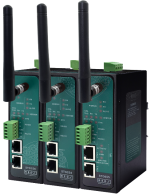
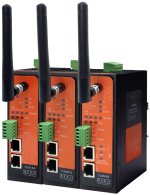
TLM Series LoRa Modems and LoRaWAN EndNode Modems

TLM Series LoRa Modems and LoRaWAN EndNode Modems


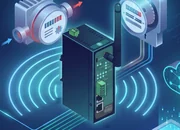
TLM Series LoRaWAN EndNode Modems can create a link between field devices and LoRaWAN server.

Field devices with TCP/IP connectivity can be read via Modbus TCP protocol and data can be sent to LoRaWAN Server. Field devices with RS232/RS485 Serial interface can be read via Modbus RTU protocol and data can be sent to LoRaWAN Server as well. Up to 64 Modbus devices in the field can be connected to LoRaWAN Server via TLM Series LoRaWAN EndNode Modems. Modbus Query interval and LoRaWAN minimum data send interval can easily be configured for each query on TLM web interface and user can also configure Modbus Query for each device by selecting address, function code, data address, total number of data and time out interval.

Function codes
1: Read Coils Status
2: Read Input Status
3: Read Holding Registers
4: Read Input Registers are supported.

LoRaWAN Downlink messages can be used to send Custom Modbus Commands remotely to control field TCP/IP and RS232/RS485 devices from LoRaWAN Server Side. Function codes 1-2-3-4 are supported and additionally:
5: Force Single Coil
6: Preset Single Register are supported for remote control.

Transparent connection between field devices and applications and LoRaWAN server is also available. In this function, TCP/IP or RS232/RS485field devices can send data to LoRaWAN Server as it is.

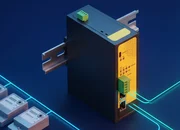
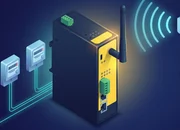
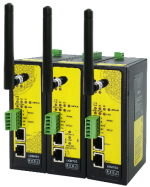
The TLM Series LoRa RF Modems build a private radio network between Ethernet devices and RS232 / RS485 serial devices. Two or more modems exchange data over LoRa; each modem connects the radio network to its own Ethernet port or serial port. The data passes unchanged, so any protocol can be carried. For Modbus the modem can also convert between Modbus TCP and Modbus RTU. The web interface lists the other modems a TLM hears, with their signal levels, addresses and settings, and offers a remote ping, a link test and remote node information for installation. The 868 MHz models are TLM154, TLM254 and TLM655, the 2.4 GHz models TLM194, TLM294 and TLM695.

Four device functions, chosen on the Operating Mode page:

1. LoRa to TCP/UDP Server Gateway
2. LoRa to TCP/UDP Client Gateway
3. LoRa to SERIAL Device Gateway, optionally with Modbus TCP to RTU conversion, Modbus RTU master to TCP conversion or IEC 62056-21 Mode C baud switching
4. LoRa Repeater

Typical applications: automated meter reading, wireless networks, home, building and industrial automation, remote control, wireless sensors, telemetry, wireless alarm and security systems.

TLM655 and TLM695 add a BPL (Broadband Power Line) link that carries Ethernet over the power line. Devices on the power line network talk TCP/IP to each other as over a cable, without new cabling.

Documents: TLM Series User Manual (firmware 3.00.01) - TLM Series Datasheet (TLM-Series-Datasheet-3.00.01.pdf).

* TLM655 and TLM695 are also made with a 9 - 36 V DC power input (P-P data connection).
TLM Series

Product Selection

LoRaWAN EndNode Modem
Select Options to Find Your Device
LoRa Based RF Modem
Select Options to Find Your Device

TLM Series

Product Selection

Reset filter
Model
Price
TLM354 280 USD
TLM454 290 USD
TLM755 370 USD
TLM344 280 USD
TLM364 280 USD
TLM374 280 USD
TLM444 290 USD
TLM464 290 USD
TLM474 290 USD
TLM745 370 USD
TLM765 370 USD
TLM775 370 USD
Product not found
LKM Series Electricity Meter Protocol to Modbus Protocol Gateways with MQTT (and LoRaWAN)
STG Series WMBus (Wireless MBus) - Modbus Protocol Gateway with MQTT
TLM Series LoRa Modems and LoRaWAN EndNode Modems
CKL Series Modbus TCP and RTU Gateways and Serial to Ethernet Gateways
BSB Series Industrial Unmanaged Ethernet Switch (with Broadband Power Line)
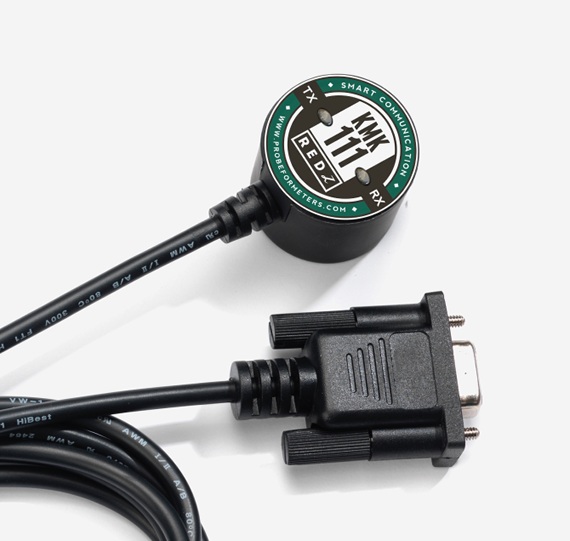
KMK Series Optical Probes for Energy Meters
HUR Series Modbus TCP and RTU Remote I/O Devices with MQTT (and LoRaWAN)
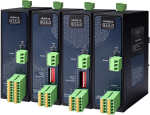
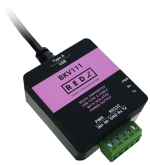
BKV Series Industrial Converters and USB Tools
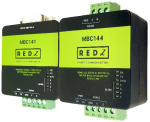
MBC Series IEC62056-21 Protocol Auto Baud Changer
KMK Series Optical Probes for Energy Meters
REDZ Software Solutions
LoRaWAN
LoRaWAN
In today's rapidly digitizing world, IoT (Internet of Things) devices and applications are becoming increasingly prevalent. In this context, long-range wireless communication technologies play a significant role. One such technology that stands out is LoRa, which offers an innovative solution for low-power, long-range wireless communication.
MQTT
MQTT
As the Internet of Things (IoT) continues to grow, the demand for efficient, lightweight, and reliable communication protocols becomes essential. One of the most popular protocols meeting these demands is MQTT (Message Queuing Telemetry Transport).
Broadband Power Line (BPL)
Broadband Powerline Technology (BPL), also known as Powerline Communication (PLC), represents a revolutionary approach to data transmission, leveraging the existing electrical power infrastructure to deliver broadband internet connectivity.
Wireless MBus (WMBus)
In an era defined by connectivity and data-driven decision-making, the need for efficient and reliable metering solutions has never been greater. Enter Wireless M-Bus (Meter-Bus) technology, a versatile and robust platform designed to revolutionize remote meter reading and data communication in utility management systems.
IEC62056-21 (for Electricity Meters)
IEC 62056-21 is an international standard for communication with electricity meters. Developed by the International Electrotechnical Commission (IEC), this protocol standardizes the way data is exchanged between meters and various devices or systems, ensuring interoperability and efficient data management.
DLMS/COSEM (for Electricity Meters)
DLMS/COSEM (Device Language Message Specification / Companion Specification for Energy Metering) is the global standard for smart energy metering. It provides a highly secure, interoperable framework for reading and managing energy data across diverse utility networks.
P1 Companion Standard (for Electricity Meters)
Smart energy meters have become essential in monitoring and controlling energy usage. To facilitate better integration, communication, and functionality of these smart meters, standards are crucial. One such standard, particularly relevant in Europe, is the P1 Companion Standard.
Modbus RTU
Modbus RTU
Modbus RTU is a widely recognized and utilized communication protocol in the field of industrial automation. Developed by Modicon (now Schneider Electric) in 1979, it was designed to facilitate communication between various electronic devices, primarily programmable logic controllers (PLCs).
Modbus TCP
Modbus TCP
Modbus TCP, also known as Modbus TCP/IP, is a widely adopted communication protocol in the industrial automation sector. It was developed to enable Modbus communication over Ethernet networks, combining the reliability and simplicity of the Modbus protocol with the versatility of Ethernet.
LoRa RF Communication
LoRa stands for Long Range and is a proprietary wireless modulation technique developed by Semtech. Essentially, LoRa is the physical layer, or the hardware, that allows long-range communication between devices.
MBus
MBus
M-Bus (Meter-Bus) is a robust European standard specifically designed for the remote reading of utility meters, such as electricity, gas, water, and heat. It utilizes a simple, polarity-independent two-wire system that transmits both data and power over long distances, making it highly cost-effective and immune to industrial noise.