We use cookies to optimize site functionality and provide the best possible experience.
View our new Privacy and Protection of Personal Data here.
Accept Settings
< ALL Technologies

Remote I/O

Remote I/O
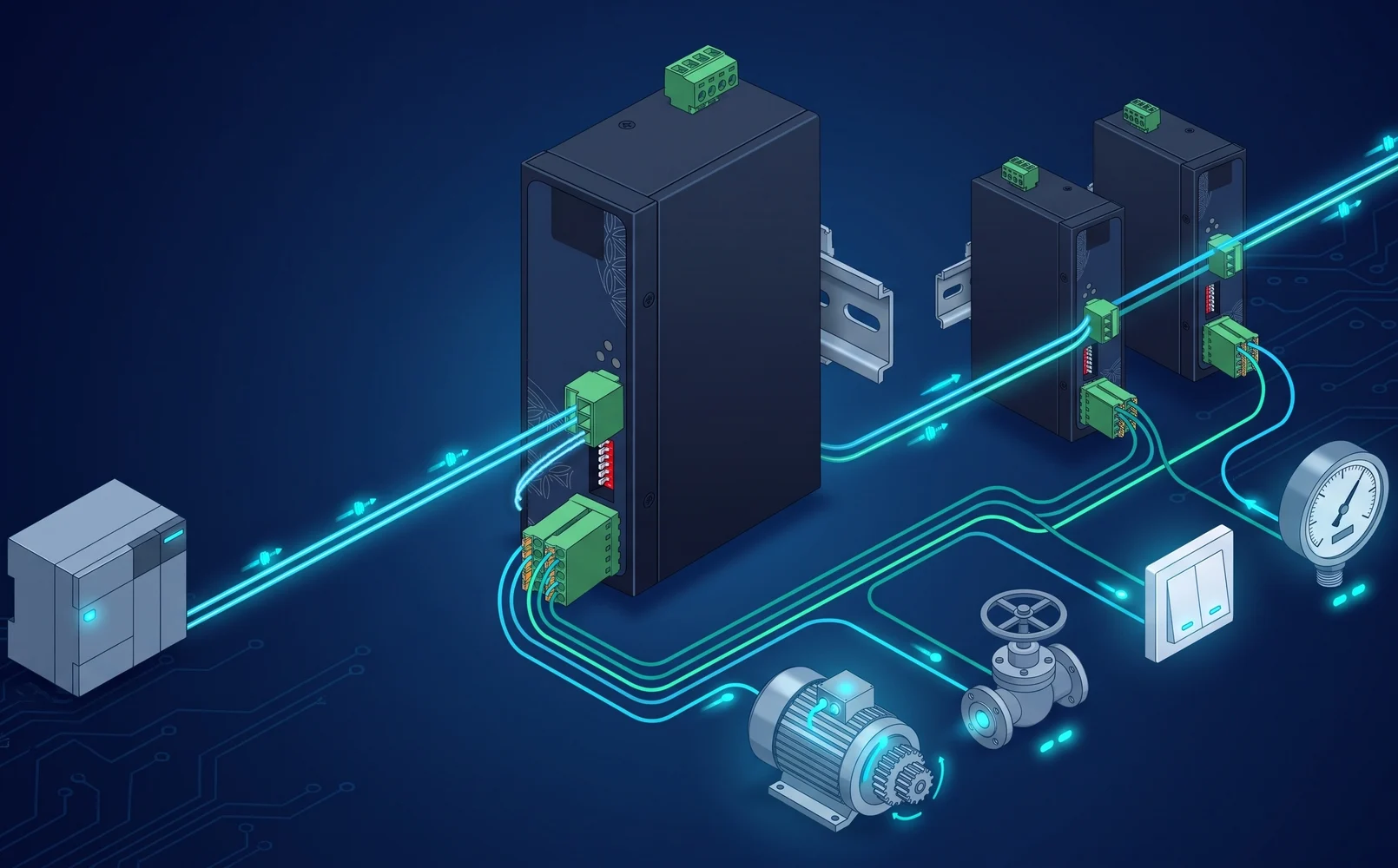
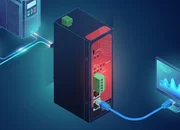
A remote I/O device links the sensors, switches, relays and analog signals of a machine or a site to a central controller, such as a PLC or a SCADA computer, even when they are far from it. The module is installed near the field devices, so every signal does not need its own cable back to the controller.

HUR Series Modbus RTU Remote I/O Devices add 8 digital outputs, 8 digital inputs, 8 analog inputs or 5 analog outputs to any Modbus RTU master over one RS485 line. The modules on the line are told apart by their Modbus address (1 to 247).

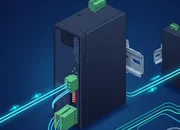
A communication watchdog keeps the outputs in a defined state when the master stops polling, and the firmware is updated over the same RS485 line.

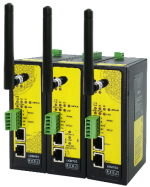
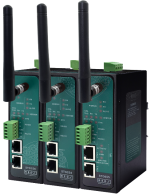
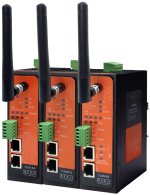
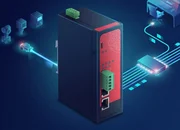
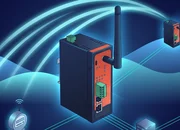
For Ethernet networks and wireless sites, the HUR Series also has Modbus TCP Remote I/O and Multi I/O devices with MQTT, and LoRaWAN and Modbus TCP Remote Multi I/O devices. They are listed below.

Products that utilize Remote I/O technology

HUR Series

❚
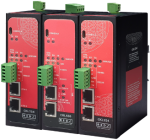
Modbus RTU Remote I/O Devices
❚
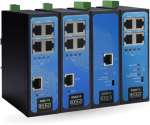
Modbus TCP Remote I/O Devices with MQTT
❚
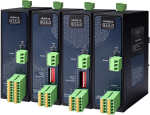
Modbus TCP Remote Multi I/O Devices with MQTT
❚
868MHz LoRaWAN and Modbus TCP Remote Multi I/O Devices with MQTT
< ALL Technologies
LKM Series Electricity Meter Protocol to Modbus Protocol Gateways with MQTT (and LoRaWAN)
STG Series WMBus (Wireless MBus) - Modbus Protocol Gateway with MQTT
TLM Series LoRa Modems and LoRaWAN EndNode Modems
CKL Series Modbus TCP and RTU Gateways and Serial to Ethernet Gateways
BSB Series Industrial Unmanaged Ethernet Switch (with Broadband Power Line)
HUR Series Modbus TCP and RTU Remote I/O Devices with MQTT (and LoRaWAN)
BKV Series Industrial Converters and USB Tools
MBC Series IEC62056-21 Protocol Auto Baud Changer
KMK Series Optical Probes for Energy Meters
REDZ Software Solutions
LoRaWAN
LoRaWAN
In today's rapidly digitizing world, IoT (Internet of Things) devices and applications are becoming increasingly prevalent. In this context, long-range wireless communication technologies play a significant role. One such technology that stands out is LoRa, which offers an innovative solution for low-power, long-range wireless communication.
MQTT
MQTT
As the Internet of Things (IoT) continues to grow, the demand for efficient, lightweight, and reliable communication protocols becomes essential. One of the most popular protocols meeting these demands is MQTT (Message Queuing Telemetry Transport).
Broadband Power Line (BPL)
Broadband Powerline Technology (BPL), also known as Powerline Communication (PLC), represents a revolutionary approach to data transmission, leveraging the existing electrical power infrastructure to deliver broadband internet connectivity.
Wireless MBus (WMBus)
In an era defined by connectivity and data-driven decision-making, the need for efficient and reliable metering solutions has never been greater. Enter Wireless M-Bus (Meter-Bus) technology, a versatile and robust platform designed to revolutionize remote meter reading and data communication in utility management systems.
IEC62056-21 (for Electricity Meters)
IEC 62056-21 is an international standard for communication with electricity meters. Developed by the International Electrotechnical Commission (IEC), this protocol standardizes the way data is exchanged between meters and various devices or systems, ensuring interoperability and efficient data management.
DLMS/COSEM (for Electricity Meters)
DLMS/COSEM (Device Language Message Specification / Companion Specification for Energy Metering) is the global standard for smart energy metering. It provides a highly secure, interoperable framework for reading and managing energy data across diverse utility networks.
P1 Companion Standard (for Electricity Meters)
Smart energy meters have become essential in monitoring and controlling energy usage. To facilitate better integration, communication, and functionality of these smart meters, standards are crucial. One such standard, particularly relevant in Europe, is the P1 Companion Standard.
Modbus RTU
Modbus RTU
Modbus RTU is a widely recognized and utilized communication protocol in the field of industrial automation. Developed by Modicon (now Schneider Electric) in 1979, it was designed to facilitate communication between various electronic devices, primarily programmable logic controllers (PLCs).
Modbus TCP
Modbus TCP
Modbus TCP, also known as Modbus TCP/IP, is a widely adopted communication protocol in the industrial automation sector. It was developed to enable Modbus communication over Ethernet networks, combining the reliability and simplicity of the Modbus protocol with the versatility of Ethernet.
Remote I/O
Remote I/O
Field inputs and outputs read and controlled from a distance over Modbus RTU, Modbus TCP, MQTT or LoRaWAN.
LoRa RF Communication
LoRa stands for Long Range and is a proprietary wireless modulation technique developed by Semtech. Essentially, LoRa is the physical layer, or the hardware, that allows long-range communication between devices.
MBus
MBus
M-Bus (Meter-Bus) is a robust European standard specifically designed for the remote reading of utility meters, such as electricity, gas, water, and heat. It utilizes a simple, polarity-independent two-wire system that transmits both data and power over long distances, making it highly cost-effective and immune to industrial noise.