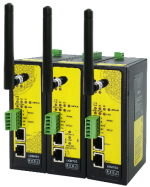
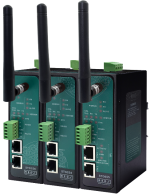
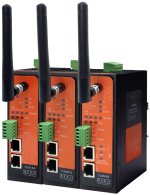
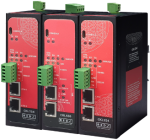
Updated for firmware 3.00.00 (first published 01.25.2025).
1.Introduction
The STG series provides an efficient and robust solution for reading and interpreting Wireless M-Bus (W-MBus) data from OMS (Open Metering System)-compliant devices. STG Series WMBus Gateways receive Wireless M-Bus (WMBus) telegrams of meters over the air, decrypt and parse them, and make the meter values available as Modbus registers and as MQTT messages.
2.Overview of Wireless M-Bus and OMS
Wireless M-Bus Protocol: This protocol is part of the EN 13757 standard and is widely adopted in Europe for smart metering. It provides a reliable method for wireless communication between meters and data collection systems, supporting various modes such as S, T, and C modes, each designed for specific use cases and data rates.
Open Metering System (OMS): OMS builds on the Wireless M-Bus protocol, ensuring interoperability between devices from different manufacturers. It standardizes the data format, encryption, and transmission mechanisms, making it a preferred choice for utilities and other stakeholders in the smart metering ecosystem.
The STG listens on 868 MHz in S mode, T mode, or C and T mode together.
3.Key Features of the STG Series
The STG series devices are engineered to simplify the process of collecting and interpreting W-MBus data, offering the following features:
• WMBus to Modbus TCP: meter values are read as Modbus TCP registers.
• WMBus to Modbus RTU: meter values are read as Modbus RTU registers.
• WMBus Decoder/Parser and MQTT Publisher: meter values are published to an MQTT broker.
• Transparent functions: received telegrams are passed to TCP/IP clients or to the serial port; clients can send telegrams to the air.
• Decryption: AES-128 in security modes 5 (AES-128 CBC), 7 (AES-128 CBC with dynamic key) and 128 (ELL AES-128 counter mode).
• Capacity: up to 128 meters (STG154 Lite: 20) with decryption and Modbus mapping.
• Serial interfaces: 1 x RS232 and 1 x RS485 (STG154 Lite: RS485).
• Configurable options: reception mode, AES keys (typed, from a CSV file or from a Kamstrup KEM file), white list and black list.

4.How to Use the STG Series with Wireless M-Bus Devices
1. Setup and configuration: connect the gateway to your network and open its web interface; the abcZ Network Tool finds its address by MAC address. Choose the Device Function on the Operating Mode page and, on the WMBus Settings page, the Rx Package Reception Mode your meters transmit in (factory default T - Mode).
2. Data collection: place the gateway within radio range of the meters. Meters transmit on their own schedule; the gateway collects every meter it hears in its detection list. Press Refresh Auto Config List to add the heard meters, type the AES key of each encrypted meter, save and restart.
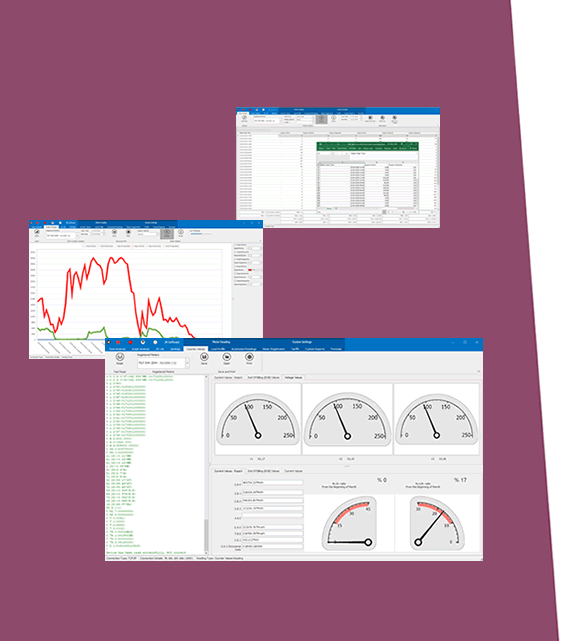
3. Parsing and analysis: on the WMBus Status page the Meters card shows every meter of the meter list with its signal strength and decryption state, and OMS Parsing shows the decoded records of the last telegram. The installer view is made for a phone on site. The parsed data leaves the gateway as Modbus registers or as MQTT messages.
Screenshots of these pages are in chapters 10.7.1 - 10.7.6 and chapter 12 of the STG user manual; the check step by step is chapter 10.7.7 "Checking that a meter is heard and decrypted".
5.Example Applications
• Utility Metering: Collect consumption data from water, gas, or electricity meters for billing and monitoring.
• Energy Management: Integrate metering data into energy management systems for real-time monitoring and optimization.
• Smart Cities: Enable large-scale data collection for city-wide utility management and analytics.
• Industrial Automation: Monitor utility usage in factories and other industrial settings to optimize operations.
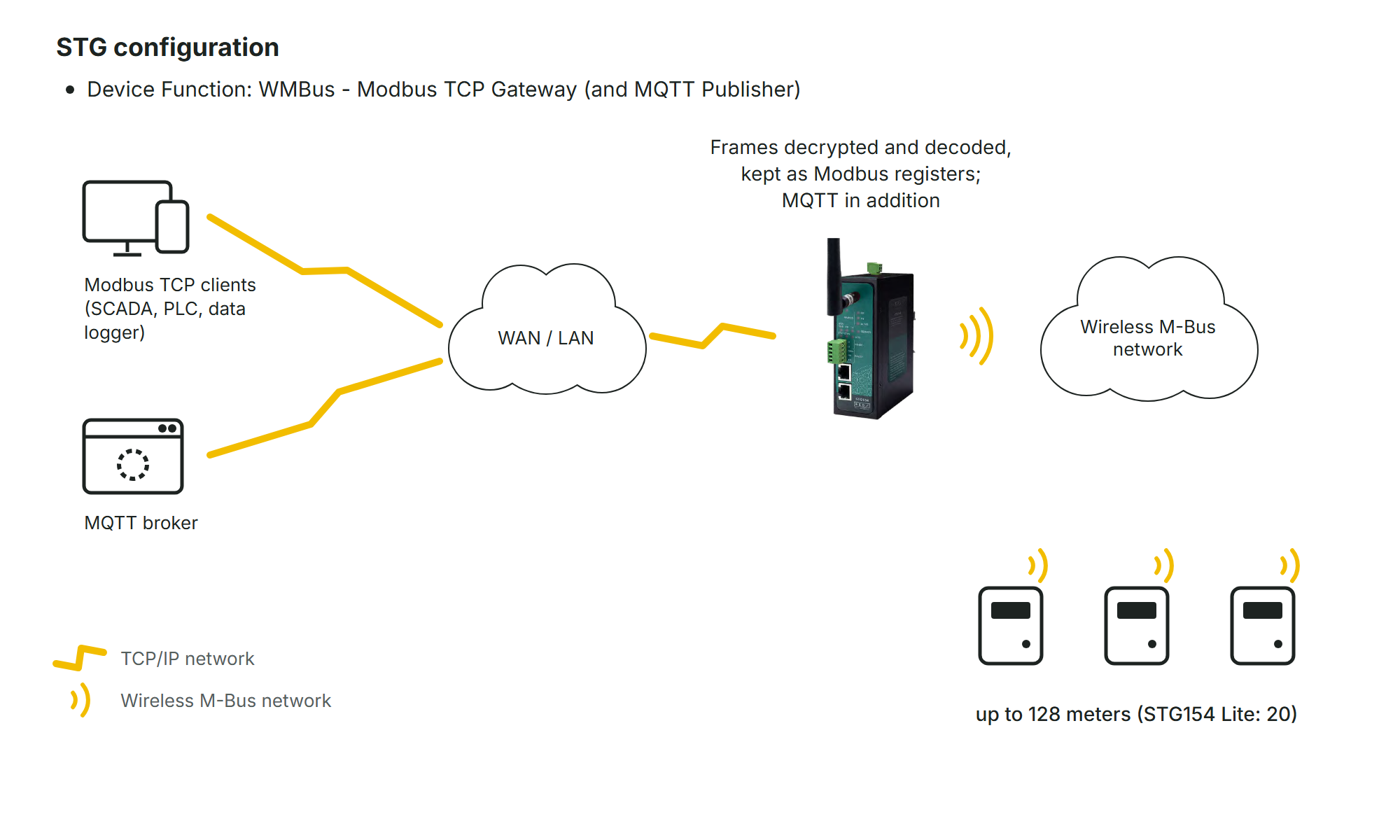
Typical application - WMBus - Modbus TCP Gateway (and MQTT Publisher)
6.Benefits of Using the STG Series
• Time Efficiency: Simplifies the otherwise complex task of decoding OMS data.
• Cost Savings: Reduces the need for expensive proprietary solutions.
• Flexibility: Supports a wide range of configurations to accommodate diverse use cases.
• Reliability: Designed for robust operation in challenging environments.
7.Conclusion
The STG series is an excellent choice for reading and parsing Wireless M-Bus data from OMS-compliant devices. With its rich feature set and ease of use, it empowers utilities, system integrators, and developers to build efficient and scalable metering solutions. Whether for small-scale deployments or large smart city projects, the STG series delivers the tools needed to harness the full potential of Wireless M-Bus technology.